Skip to content
A driveway is one of the largest paved surfaces most Western New York homeowners own, and at some point every asphalt driveway needs work. The hard part is knowing which work. Sealcoating, resurfacing, and full replacement are three very different projects at three very different price points, and choosing the wrong one wastes money in one direction or the other. Sealcoating a driveway that is structurally failing only delays the inevitable, while replacing a driveway that simply needed resurfacing spends thousands more than necessary.
This guide walks through all three options: what each one actually does, what it costs in the Western New York market, and a straightforward framework for deciding which your driveway needs. Prestige Paving & Sealing works on asphalt driveways throughout Niagara County, Erie County, and the greater Lockport area, and this is a decision we help homeowners think through every week.
Three Levels of Driveway Work, One Big Difference
Sealcoating, resurfacing, and replacement form a ladder. Each step up addresses deeper damage, costs more, and lasts longer. The single most important idea in this whole decision is the condition of the base, the compacted gravel and sub-base beneath the asphalt. If the base is sound, you have options. If the base has failed, no surface treatment will save the driveway, and replacement is the only lasting fix. Keep that idea in mind as we go through each option.
Sealcoating: Protecting a Driveway That Is Still Sound
What sealcoating does
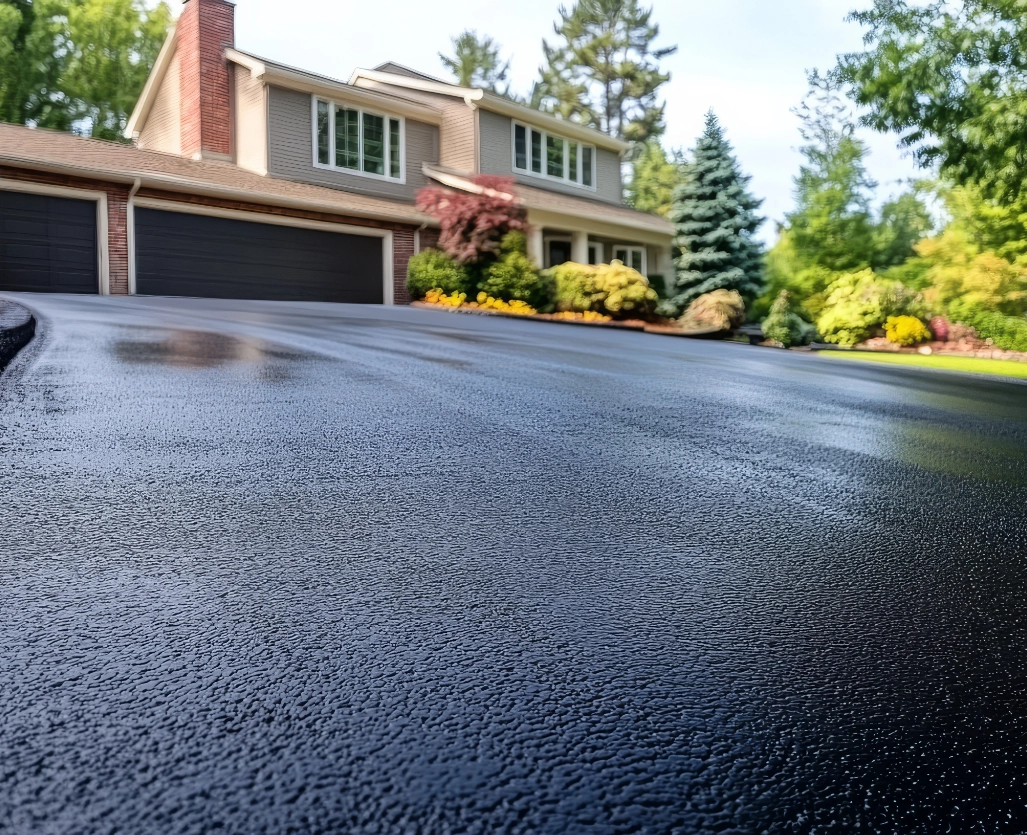
Sealcoating is a protective coat applied over the surface of an asphalt driveway. It is not a repair. It does not fix cracks or potholes, and it does not add structural strength. What it does is shield the asphalt from the things that age it: water, sunlight and UV rays, and the salt and chemicals of a Western New York winter. A sealcoat restores the deep black finish of the driveway and slows the oxidation that turns asphalt gray, brittle, and crack-prone.
When sealcoating is the right call
Sealcoating is the right choice for a driveway that is fundamentally in good shape. If the surface is intact, the base is solid, and there are only minor hairline cracks or simple fading and graying, sealcoating is exactly the maintenance the driveway needs. It is also the routine that extends the life of a newer driveway. A driveway that is sealed on a regular cycle, with cracks filled as they appear, can last far longer than one left exposed.
What it costs and how long it lasts
Sealcoating is by far the most affordable of the three options. For a typical residential driveway in the Western New York market, sealcoating generally runs in the range of $300 to $600, depending on the size and condition of the driveway. A sealcoat is not permanent: it wears, and most driveways benefit from resealing every few years. That modest, repeating cost is what makes sealcoating a maintenance practice rather than a one-time fix, and it is the most affordable protection available for an asphalt driveway.
Resurfacing: A New Surface Over a Sound Base
What resurfacing involves
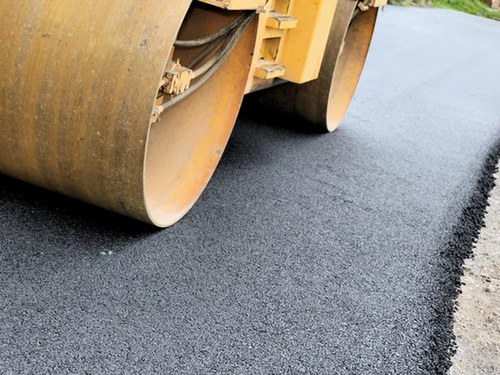
Resurfacing, sometimes called a mill and overlay, installs a fresh layer of asphalt over the existing driveway. The existing surface is prepared, problem areas are addressed, and a new layer of asphalt, usually around an inch and a half to two inches thick, is laid and compacted over the top. The result is a brand-new driving surface without the cost and disruption of a full tear-out.
When resurfacing is the right call
Resurfacing is the right call when the surface of the driveway is worn or cracked but the base underneath is still solid. If you have widespread surface cracking, areas of rough or raveling asphalt, or a driveway that simply looks tired and heavily patched, but you are not seeing the signs of base failure, resurfacing gives you a new driveway at a fraction of replacement cost. The key qualifier is always the base. Resurfacing over a failing base will fail along with it.
What it costs
Resurfacing runs roughly $3 per square foot in the Western New York market. For perspective, that is about one-third the cost of a full replacement, which makes resurfacing the value option whenever the base allows it. It is the middle rung of the ladder for a reason: a new surface, a long service life, and a cost well below starting over.
A New Asphalt Driveway: Starting Over From the Base
What a full replacement involves
A full replacement removes the old driveway entirely, down through the failed surface and, where needed, into the base. The sub-base is regraded and recompacted, drainage problems are corrected, and new asphalt is installed over a properly prepared foundation. It is the most involved of the three projects, and it is also the only one that resolves a failed base.
When replacement is the right call
Replacement is the right call when the driveway has structural problems, not just surface ones. The clear signs include potholes that return after patching, areas that sink or settle, and alligator cracking, an interconnected web of cracks that looks like reptile skin and signals base failure. A driveway old enough that resurfacing would simply be paving over a foundation at the end of its life also points to replacement. When the base is gone, replacement is not the expensive option. It is the only option that lasts.
What it costs
A new asphalt driveway runs approximately $9 per square foot in the Western New York market. It is the largest of the three investments, but it resets the clock completely. A properly installed driveway over a sound base, maintained with regular sealcoating, can last for decades. Spread across that lifespan, a replacement done at the right time is sound money.
A Side-by-Side Comparison
| Factor | Sealcoating | Resurfacing | New Driveway |
|---|---|---|---|
| What it addresses | Surface protection and appearance | A worn or cracked surface over a sound base | Structural failure, a failed base |
| Typical WNY cost | About $300 to $600 per driveway | About $3 per square foot | About $9 per square foot |
| Best for | A sound driveway needing maintenance | Surface damage, base still solid | Potholes, sinking, alligator cracking |
| Lifespan added | A few years per application | Many years | Decades, with maintenance |
| Disruption | Minimal, dries quickly | Moderate, often one to two days | Highest, full removal and install |
How to Decide: A Simple Framework
Start with the base
Every decision begins with the base. Ask one question: is the failure structural, or only on the surface? Sinking, settling, returning potholes, and alligator cracking all point to base failure, and base failure means replacement. If the base is sound, you are choosing between sealcoating and resurfacing.
Look at the cracks
Cracks tell a story. A few thin hairline cracks on an otherwise solid driveway are normal aging, and crack filling paired with sealcoating handles them. Widespread cracking across the surface, without the interconnected alligator pattern, points toward resurfacing. Alligator cracking points toward replacement.
Consider the age
Age is context, not a verdict. A driveway in its first decade with minor wear is a sealcoating candidate. A driveway in the 15-to-20-year range with surface fatigue but a sound base is often a strong resurfacing candidate. A driveway well past 20 years with structural issues is usually telling you it is time to replace.
Weigh the math
Finally, think in terms of cost over time. Sealcoating a driveway that needs resurfacing buys a season or two, and then you still pay for the resurfacing. Replacing a driveway that only needed resurfacing spends roughly three times what the job required. The least expensive path over the long run is almost always matching the work to the actual condition, which is exactly what an honest assessment provides.
Why Western New York Makes This Decision Matter More
Our climate accelerates every form of asphalt aging. Western New York drives a driveway through dozens of freeze-thaw cycles each winter, where water works into cracks, freezes, expands, and widens them. Lake-effect snow keeps surfaces wet for long stretches, and the road salt that keeps us safe is hard on asphalt. All of that means a Western New York driveway ages faster than one in a milder climate, and it means the cost of choosing wrong is higher here. A driveway left unsealed deteriorates quickly, and small problems become structural ones in fewer winters than homeowners expect. The upside is that the same climate makes timely maintenance genuinely valuable: sealcoating on a regular cycle and resurfacing at the right moment both pay off.
What Drives the Cost of Each Option
The figures above are reliable Western New York ranges, but a few factors move the final number, and it helps to know them. The size of the driveway is the most obvious: cost scales with square footage, so a long or wide driveway naturally costs more than a short one. Site conditions matter too. A driveway with drainage problems, significant slope, or difficult access can add preparation work, and a replacement that requires correcting a poorly graded base is more involved than one that does not.
The condition of the driveway going in also affects resurfacing and replacement. A resurfacing job over a surface that needs extensive patching first costs more than one over a cleaner surface. For a replacement, the depth of base work required, simply recompacting versus regrading and adding material, changes the scope. None of this changes which option is right for your driveway, since that is set by the condition of the base. But it does mean the only truly accurate number comes from an on-site assessment, which is why a professional estimate is the right basis for a budget.
The Bottom Line
Sealcoating protects a sound driveway, resurfacing renews a worn surface over a solid base, and replacement is the answer when the base has failed. The right choice is the one that matches your driveway’s actual condition, and the most reliable way to know that condition is a professional assessment. Prestige Paving & Sealing provides honest evaluations and clear estimates for asphalt driveways across Niagara County, Erie County, and the greater Lockport area, so the recommendation you get is the work your driveway actually needs.
Frequently Asked Questions
How do I know if I need a new driveway or just resurfacing?
The deciding factor is the base beneath the asphalt. If you see potholes that return after patching, areas that sink or settle, or alligator cracking (an interconnected web of cracks), the base has likely failed and replacement is needed. If the damage is limited to a worn or cracked surface over a solid base, resurfacing is usually the better value.
How much does a new asphalt driveway cost in Western New York?
A new asphalt driveway runs approximately $9 per square foot in the Western New York market. Resurfacing, by comparison, runs about $3 per square foot. The right figure for your driveway depends on its size and site conditions, so a professional estimate is the most accurate way to plan.
Is sealcoating worth it?
For a driveway that is structurally sound, yes. Sealcoating shields asphalt from water, UV rays, and winter salt, and it slows the oxidation that makes asphalt brittle and crack-prone. It does not repair cracks or fix a failing base, but as routine maintenance it meaningfully extends the life of a sound driveway.
How often should an asphalt driveway be sealcoated?
Most asphalt driveways benefit from resealing every few years, since a sealcoat wears over time. Pairing regular sealcoating with prompt crack filling is the maintenance routine that keeps a Western New York driveway lasting as long as possible.
Can I resurface a driveway with potholes and sinking areas?
It is not advisable. Potholes and sinking areas are signs of base failure, and a new asphalt surface laid over a failed base will fail along with it. When the base is the problem, full replacement is the option that actually lasts. A professional assessment can confirm whether the base is sound.
How long does each option last?
Sealcoating adds a few years of protection per application and is repeated on a cycle. Resurfacing over a sound base lasts many years. A full replacement, installed properly and maintained with regular sealcoating, can last decades. Matching the work to the driveway’s condition is what gets you the longest life for the money.