Skip to content
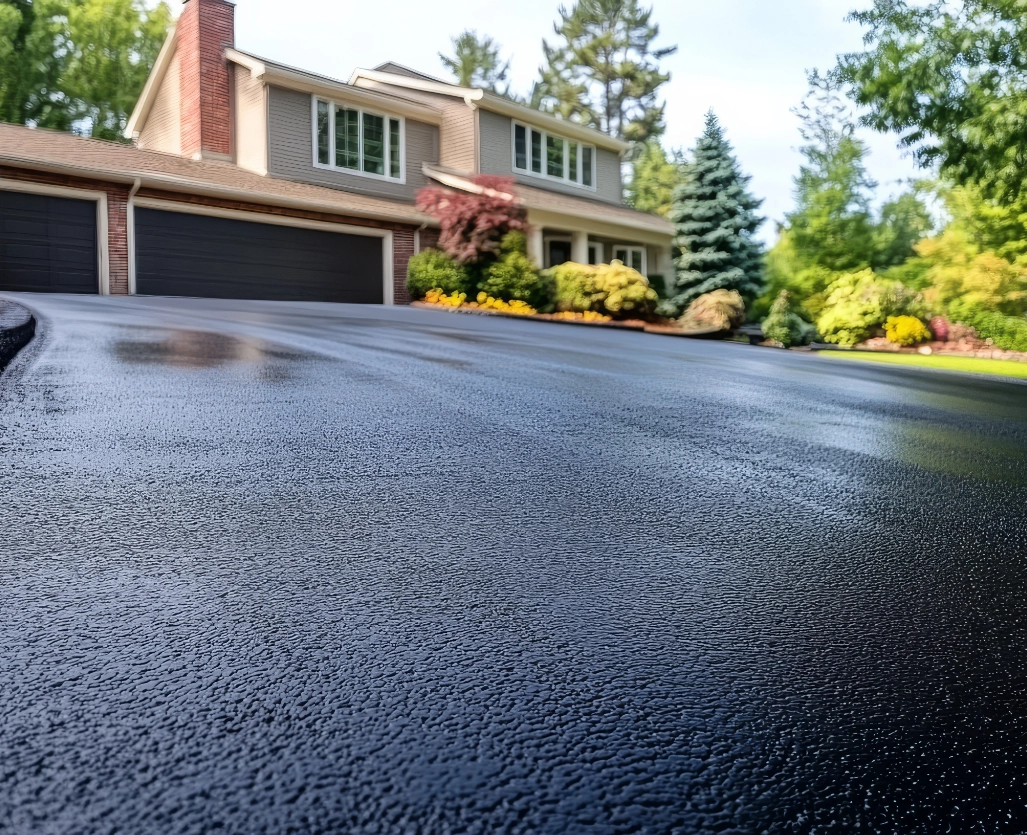
Your driveway is one of the most visible features of your property and one of the most abused. In Western New York, where driveways endure 89 or more inches of snowfall annually, repeated snow plow contact, road salt exposure, and the relentless freeze-thaw cycling that defines WNY winters, asphalt driveways deteriorate faster than in almost any other climate in the country. Sealcoating is the most effective preventive maintenance you can perform to extend the life of your asphalt and delay the expensive prospect of full driveway replacement.
But how often should you actually seal your driveway in WNY? The answer depends on your driveway’s age, condition, traffic level, and the specific environmental stressors it faces. This guide covers the recommended sealcoating frequency for Western New York homeowners, the factors that accelerate asphalt deterioration in this climate, how to tell when your driveway is due for resealing, and why the quality of the sealant matters as much as the frequency of application.
The Right Sealcoating Schedule for WNY Driveways
The general industry recommendation for sealcoating frequency is every 2 to 3 years. However, that guideline is based on average conditions across a range of climates, and Western New York is not average when it comes to the punishment driveways take.
In the Lockport, Tonawanda, and greater Buffalo area, several factors push the optimal sealcoating frequency toward the shorter end of that range. The combination of heavy snowfall, salt exposure, plow damage, UV degradation during summer, and the sheer number of freeze-thaw cycles your driveway experiences each year means that sealcoat wears faster here than in milder climates.
For a driveway in good condition that receives normal residential traffic, sealcoating every 2 years is the recommended schedule in WNY. For driveways that carry heavier traffic, support vehicles heavier than standard passenger cars, or face particularly harsh exposure such as heavy shade that keeps moisture on the surface longer, annual sealcoating may be warranted in the first few years after paving to build a strong protective base.
New asphalt driveways should not be sealed immediately after installation. Fresh asphalt needs time to cure and harden before sealcoat is applied, typically 6 to 12 months depending on the time of year it was paved. Sealing too early traps volatile oils in the asphalt that need to evaporate during the curing process, which can result in a surface that remains soft and is prone to scuffing and tracking. After the initial curing period, the first sealcoat application should be done, and then the 2-year cycle begins.
Why Western New York Is So Hard on Asphalt
Understanding why Western New York is so hard on asphalt helps explain why sealcoating is not optional maintenance but rather a necessary investment in your driveway’s longevity.
Freeze-thaw cycling is the primary enemy. Water enters small cracks and pores in the asphalt surface. When temperatures drop below freezing, that water expands as it turns to ice, widening the cracks from the inside. When temperatures rise above freezing, the ice melts and the water settles deeper into the widened cracks. The next freeze repeats the cycle with a larger crack. In the Buffalo and Niagara County area, driveways experience this cycle dozens of times per winter. Each cycle does a small amount of damage that compounds over the season and over the years.
Sealcoating directly addresses this mechanism by creating a waterproof barrier on the asphalt surface that prevents water from penetrating into the asphalt in the first place. When water cannot enter the asphalt, the freeze-thaw cycle has nothing to work with, and the primary cause of asphalt deterioration is neutralized.
Road salt and deicing chemicals are the second major stressor. Salt is hygroscopic, meaning it attracts and retains moisture. Salt residue on your driveway keeps the surface wet longer than it would otherwise be, extending the window of vulnerability to freeze-thaw damage. Salt also chemically attacks the binder in asphalt, weakening the bond between the aggregate particles and accelerating surface breakdown. Sealcoating creates a barrier between the salt and the asphalt binder, protecting the structural integrity of the pavement.
UV radiation during summer months oxidizes the asphalt binder, causing it to dry out, become brittle, and lose its flexibility. Oxidized asphalt cannot flex with temperature changes, making it more susceptible to cracking. The dark surface of fresh sealcoat absorbs UV radiation at the surface rather than allowing it to penetrate into the asphalt, and the sealant itself contains UV-resistant compounds that slow the oxidation process.
Snow plow contact is a mechanical stressor unique to northern climates. Even careful plowing scrapes the surface of the driveway, wearing away the sealcoat and eventually the asphalt surface itself. A fresh sealcoat provides a sacrificial layer that absorbs the abrasion from plow blades, protecting the asphalt underneath. This is one reason why regular resealing is more important in WNY than in climates where snow plowing is not a factor.
How to Tell When Your Driveway Needs Resealing
There are two simple tests you can perform yourself to determine whether your driveway is due for sealcoating.
The color test is the most obvious indicator. Fresh sealcoat is a deep, uniform black. As the sealcoat wears, the surface fades to gray as the underlying asphalt and aggregate become exposed. When your driveway has shifted from black to predominantly gray, the sealcoat has worn through and the asphalt is no longer protected.
The water absorption test confirms what the color test suggests. Pour a small amount of water on the driveway surface. If the water beads up and sits on the surface, the sealcoat is still providing a waterproof barrier. If the water soaks into the surface and the asphalt darkens as it absorbs the moisture, the sealcoat has worn through and the asphalt is absorbing water that will cause freeze-thaw damage during winter.
If either test indicates that the sealcoat is no longer effective, schedule resealing before the next winter. Applying sealcoat after the protection has worn away but before significant cracking has developed is the most cost-effective timing because it prevents damage rather than requiring crack filling and patching before the sealcoat can be applied.
Why Sealant Quality Matters as Much as Frequency
The quality of the sealant product and the preparation work before application matter as much as the frequency of sealing. This is where the difference between consumer-grade hardware store products and commercial-grade professional sealants becomes significant.
Consumer-grade driveway sealers available at hardware stores are typically coal tar emulsion or asphalt emulsion products with minimal additives. They provide basic UV protection and water resistance but have a relatively short service life, often wearing through in 12 to 18 months in a demanding climate like WNY.
Commercial-grade sealants used by professional paving companies like Prestige Paving and Sealing contain specialized oils, fillers, and emulsifying additives that provide significantly longer-lasting protection. These formulations are not available to consumers and are applied using commercial spray equipment that ensures consistent thickness and coverage. The result is a coating that lasts 2 to 3 years even under WNY conditions, compared to the 12 to 18 month lifespan of consumer products.
The preparation work before sealing is equally important. Every sealcoating job at Prestige begins with crack filling and surface preparation. Cracks are cleaned and filled with hot-pour or cold-pour crack filler before the sealcoat is applied. Oil stains are treated with a primer that prevents them from bleeding through the sealcoat. Loose debris, dirt, and vegetation are removed from the surface and edges. This preparation ensures that the sealcoat adheres properly and that existing damage is addressed rather than simply covered up.
Anthony Cocca, the owner of Prestige Paving and Sealing, brings over 20 years of asphalt industry experience to every project. The BBB A-plus rating reflects the company’s commitment to quality materials, thorough preparation, and honest communication about what your driveway needs versus what it does not. Prestige serves Niagara, Erie, and Orleans counties, including Lockport, Tonawanda, North Tonawanda, Pendleton, Wheatfield, Newfane, and surrounding communities.
The Cost of Sealcoating vs. Driveway Replacement
For homeowners in WNY who want to protect their driveway investment and avoid the $5,000 to $10,000 cost of full driveway replacement, a $300 to $600 sealcoating job every two years is the most cost-effective maintenance decision you can make. Even if your driveway has reached the point where sealcoating alone is not enough, resurfacing (an asphalt overlay at approximately $3 per square foot) can restore the surface at a fraction of the cost of tearing out and replacing the entire driveway. Understanding the lifecycle cost comparison between regular sealcoating, resurfacing, and eventual full replacement puts the maintenance investment in perspective.
A new asphalt driveway in the Buffalo and Niagara County area costs approximately $9 per square foot, depending on the thickness, base preparation, and site conditions. For a standard two-car driveway of 600 to 800 square feet, that translates to roughly $5,400 to $7,200 for a full installation. Resurfacing (milling and overlaying the existing base) costs approximately $3 per square foot, or roughly $1,800 to $2,400 for that same driveway. Resurfacing is the right choice when the base is still solid but the surface layer has deteriorated beyond what sealcoating can protect.
An asphalt driveway that receives regular sealcoating every 2 years can last 25 to 30 years before replacement is needed. An unsealed driveway in WNY may need replacement in 12 to 18 years due to accelerated deterioration from freeze-thaw cycling, salt damage, and oxidation.
Over a 25-year period, the math works out clearly. Regular sealcoating at $400 every 2 years equals approximately $5,000 in total maintenance cost over 25 years, with no replacement needed. No sealcoating means a $5,400 to $7,200 replacement at year 12 to 15, plus the original installation cost, resulting in a total outlay that can be double or triple the maintenance-only approach. Even a mid-life resurfacing at $1,800 to $2,400 is a fraction of that replacement bill and can add another 8 to 12 years of service life when combined with continued sealcoating.
Crack filling between sealcoating applications extends this analysis further. A small crack that is filled for $50 today prevents water intrusion that would widen into a pothole requiring $500 to $1,000 in patch work within a few years. The economics of preventive asphalt maintenance are overwhelmingly favorable compared to reactive repair and replacement.
Commercial Properties and Year-Round Maintenance
For commercial properties with larger parking lots and heavier traffic, the economics are even more compelling. A commercial parking lot sealcoating project costs a fraction of the repaving cost and provides the same protective benefits as residential sealcoating. Prestige Paving serves commercial clients across Niagara, Erie, and Orleans counties with the same commercial-grade materials and preparation standards used for residential projects.
Prestige also provides snow removal services for commercial and industrial properties, which creates a natural synergy with the paving and sealing business. Anthony and his team see the damage that winter inflicts on asphalt surfaces firsthand during snow removal operations, and they can identify properties that need spring sealcoating or crack repair as part of their winter service relationship. This year-round presence on commercial properties allows Prestige to catch deterioration early and recommend preventive maintenance before damage escalates to the repair stage.
Schedule Your Spring Driveway Evaluation
For residential homeowners, the spring thaw is the ideal time to evaluate your driveway’s condition after another WNY winter. Walk your driveway and look for new cracks, areas where the sealcoat has worn through to gray, potholes forming at the base of the driveway where plow blades scrape, and edges that have begun to crumble. These are all signs that your driveway needs attention before the summer heat and UV exposure accelerate the deterioration further.
Contact Prestige Paving and Sealing to schedule your driveway evaluation and sealcoating service. Call 716-359-8177 for a free estimate.
Frequently Asked Questions
Q: How often should I seal my driveway in Western New York?
A: Every 2 years is the recommended sealcoating frequency for residential driveways in WNY. The combination of heavy snowfall, freeze-thaw cycling, road salt exposure, and snow plow contact wears sealcoat faster in this climate than in most other regions. Driveways with heavier traffic or particularly harsh exposure may benefit from more frequent application.
Q: How much does driveway sealcoating cost in WNY?
A: Professional driveway sealcoating in the Buffalo and Niagara County area typically costs between $300 and $600 for a standard two-car residential driveway, depending on the driveway size, condition, and the amount of crack filling required before sealing. This cost includes surface preparation, crack filling, and two coats of commercial-grade sealant.
Q: Can I seal my driveway myself?
A: Consumer-grade driveway sealers are available at hardware stores, and self-application is possible. However, consumer products provide shorter-lasting protection than commercial-grade sealants, and improper application including insufficient surface preparation, inconsistent thickness, and missed edges reduces effectiveness further. Professional application with commercial equipment and materials delivers a longer-lasting result that is more cost-effective over time.
Q: When is the best time to seal a driveway in WNY?
A: Late spring through early fall, typically May through September, provides the best conditions for sealcoating in WNY. The sealant needs at least 24 hours of dry weather and temperatures above 50 degrees Fahrenheit to cure properly. Scheduling sealcoating in late summer or early fall ensures the coating is fully cured before winter arrives.
Q: How long does sealcoating take to dry?
A: Sealcoating typically requires 24 to 48 hours to dry completely, depending on temperature, humidity, and sunlight exposure. The driveway should not be driven on or walked on during this curing period. Plan to park on the street and limit foot traffic across the driveway for at least 24 hours after application.
Q: Does sealcoating fix cracks in my driveway?
A: Sealcoating does not repair existing cracks. Cracks must be filled with crack filler before the sealcoat is applied. A quality sealcoating job always includes crack filling as part of the surface preparation. Once cracks are filled and the sealcoat is applied, the sealed surface prevents water from entering the asphalt and creating new cracks through freeze-thaw cycling.